


Japanese New Year, or “Oshogatsu,” is a special period deeply imbued with traditional culture and customs. During this time, Japanese people spend time with family and prepare to welcome the new year. This article introduces the charm of Japanese New Year, its history, and how it is celebrated in modern times.

What is Oshogatsu?
Oshogatsu is the event that celebrates the new year starting on January 1st. It is an extremely important event for Japanese people. During this period, it is common to spend time with family and close friends. Many traditional events influenced by Shinto and Buddhism are also held. Shogatsu is also a time to strengthen family bonds and pray for happiness in the coming year.
Preparations for New Year
Preparations for the New Year begin at the end of the year. The entire house is thoroughly cleaned (Osoji) to get ready for the new year. Kadomatsu and Shimekazari are placed at the entrance of the house to welcome gods and good fortune. The cleaning is also known as “Susuharai,” meaning to remove all the dirt and impurities from the house to welcome the new year in a clean state.
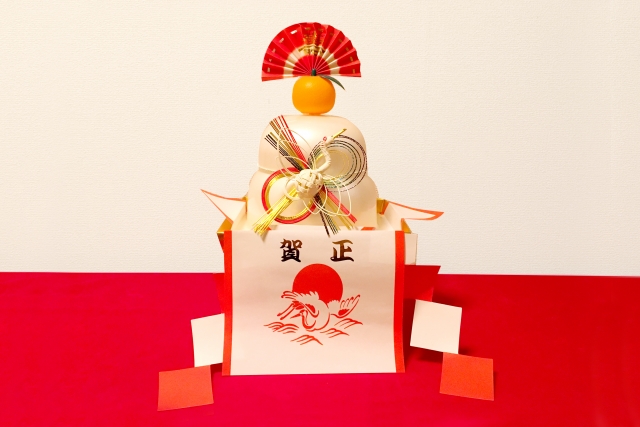
Additionally, there is a custom of decorating with Kagami Mochi. Kagami Mochi is made to welcome the Toshigami-sama (Year God). It typically consists of two stacked mochi with a daidai (a type of citrus) on top. The daidai symbolizes the hope for prosperity and longevity.
New Year Foods
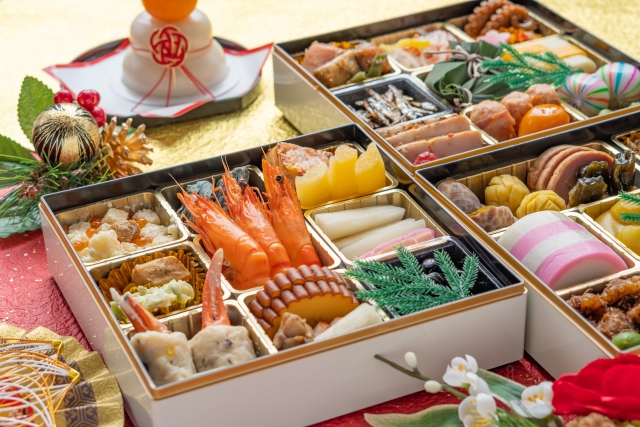
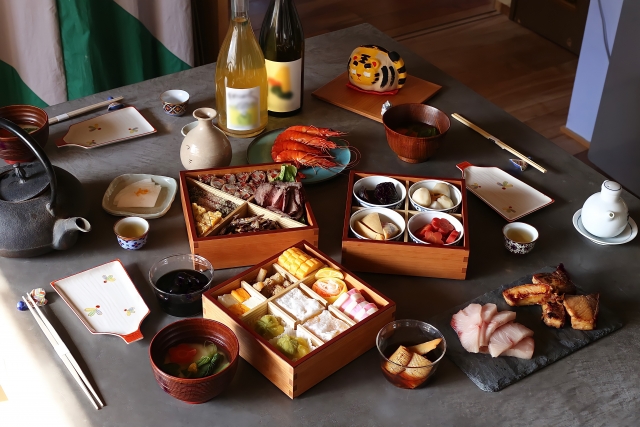
Special dishes are prepared for the New Year. The representative dish is Osechi Ryori, a variety of foods packed in a layered box, each with its own auspicious meaning. For example, black beans symbolize health, while kazunoko (herring roe) symbolizes fertility. On New Year’s Day, there is also a custom of eating ozoni, a soup with mochi. It is interesting to note that the ingredients and flavors of ozoni vary by region.
Additionally, there is a custom of eating toshikoshi soba on New Year’s Eve. This practice symbolizes the wish for longevity.

New Year Events
During New Year, people visit shrines and temples for Hatsumode, the first shrine visit of the year, to pray for happiness and health in the new year. Many people visit shrines from New Year’s Eve to New Year’s Day to make their prayers. Sending and receiving New Year’s cards (Nengajo) is also a common custom, exchanging greetings for the new year. These events are an integral part of Japanese culture and society.
Other customs include giving children Otoshidama (New Year’s money), kite flying, and playing hanetsuki (a traditional Japanese game similar to badminton).
Additionally, Shishimai (Lion Dance) is also a famous New Year tradition. The Lion Dance is believed to chase away evil spirits and bring good luck and is performed in neighborhoods and homes.

How to Enjoy New Year
In modern Japan, New Year is not only spent with family but also enjoying time with friends, playing games, and watching special TV programs. Fukubukuro (lucky bags) are a popular sale event, and many people enjoy shopping. Additionally, special TV programs such as “Kohaku Uta Gassen” (a singing contest) and comedy shows are enjoyed by many.
Watching the first sunrise of the year, known as “Hatsuhinode,” is also popular. Many people gather at coastlines or mountain tops to watch the sunrise and make wishes for the new year. Another custom is drinking special sake called “Toso,” which is infused with medicinal herbs and is believed to ward off illness and bring good health.

International Recognition
Japanese New Year is popular among foreign tourists who find its unique culture and customs fascinating. Travel agencies offer tours timed for this season, and many tourists visit Japan to experience New Year celebrations. Especially for foreigners, Hatsumode and Osechi Ryori offer fresh and intriguing experiences.
Finally
Japanese New Year is more than just a year-end event; it is a special time filled with deep history and culture. Understanding its charm and how to enjoy it allows you to feel the profound depth of Japanese culture. Enjoy the blend of tradition and modernity through New Year celebrations.
コメント
Hey people!!!!!
Good mood and good luck to everyone!!!!!
Hey people!!!!!
Good mood and good luck to everyone!!!!!
Hello.
Good cheer to all on this beautiful day!!!!!
Good luck 🙂